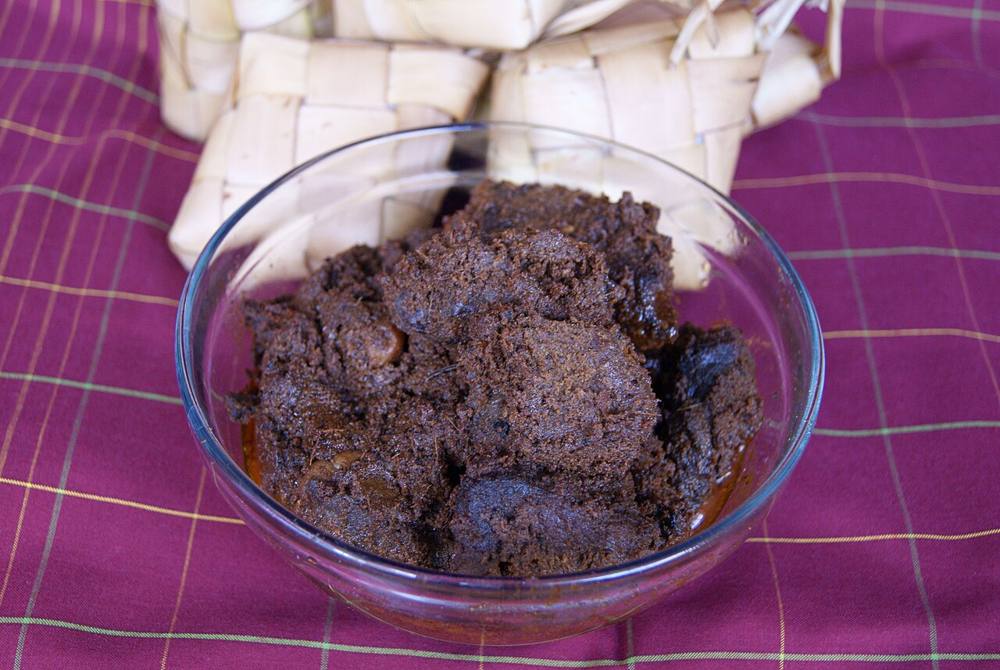
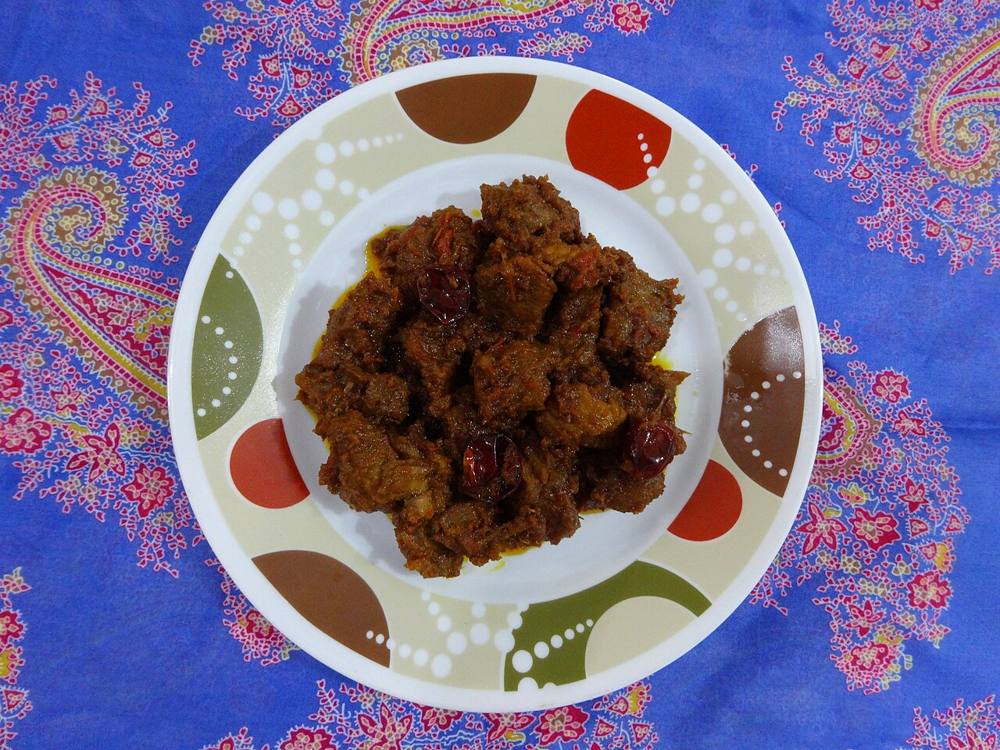
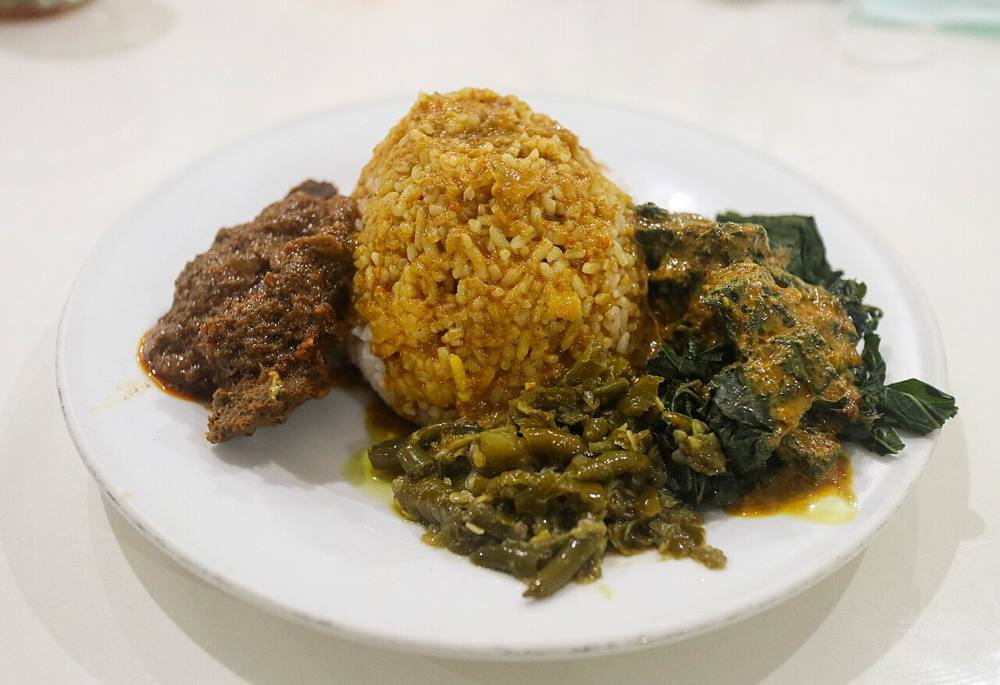
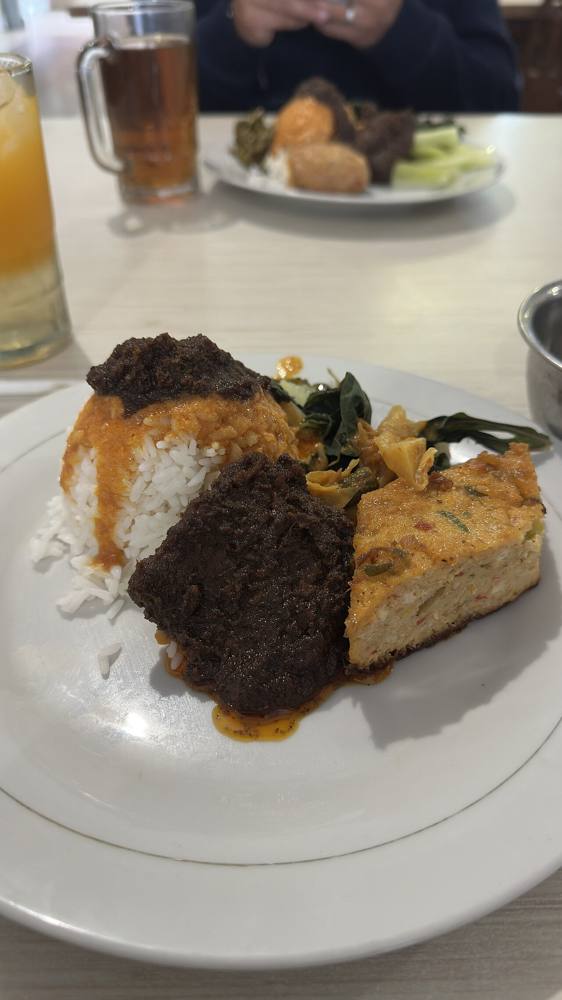
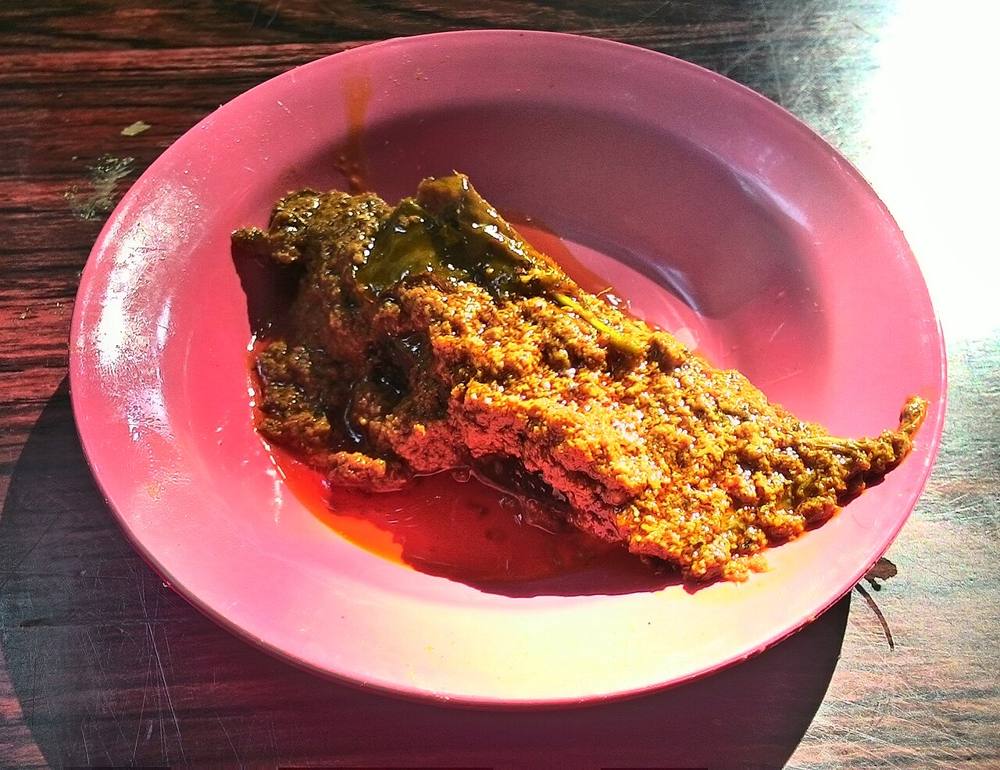
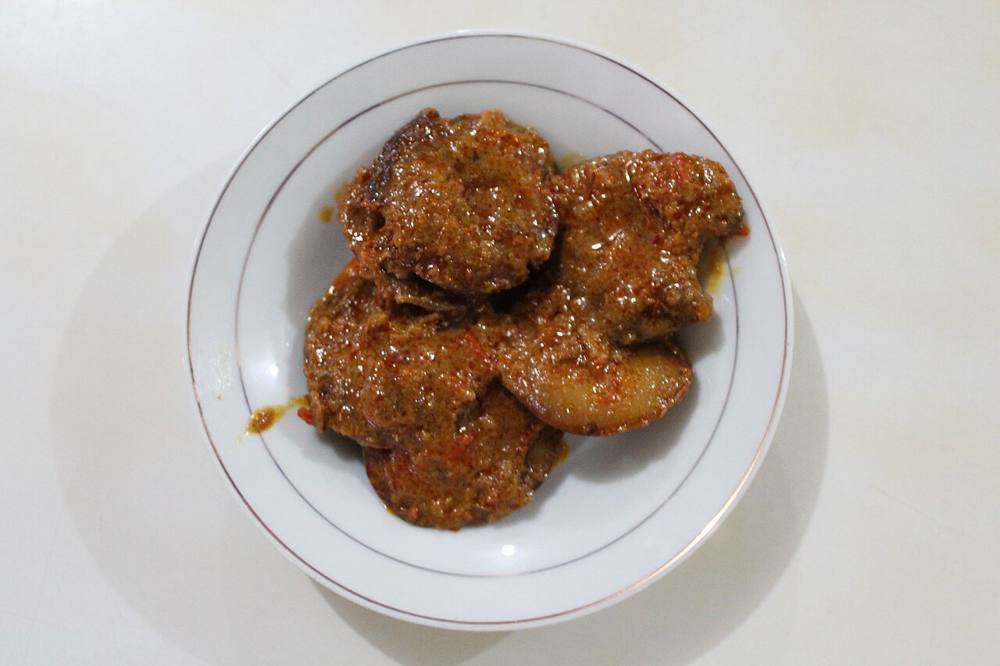
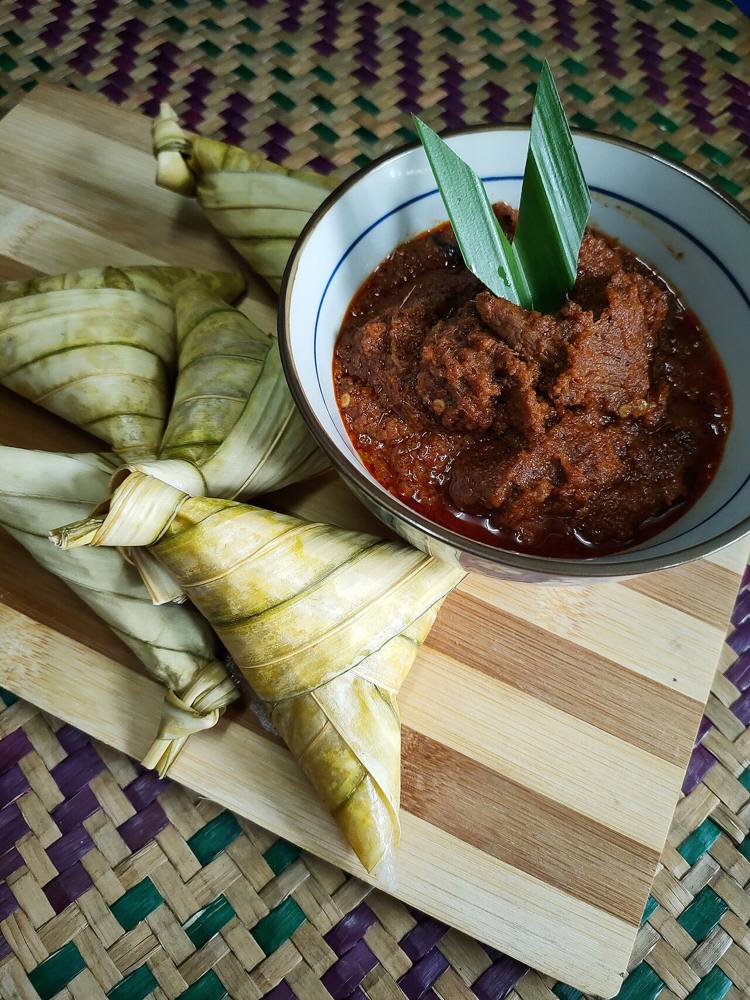
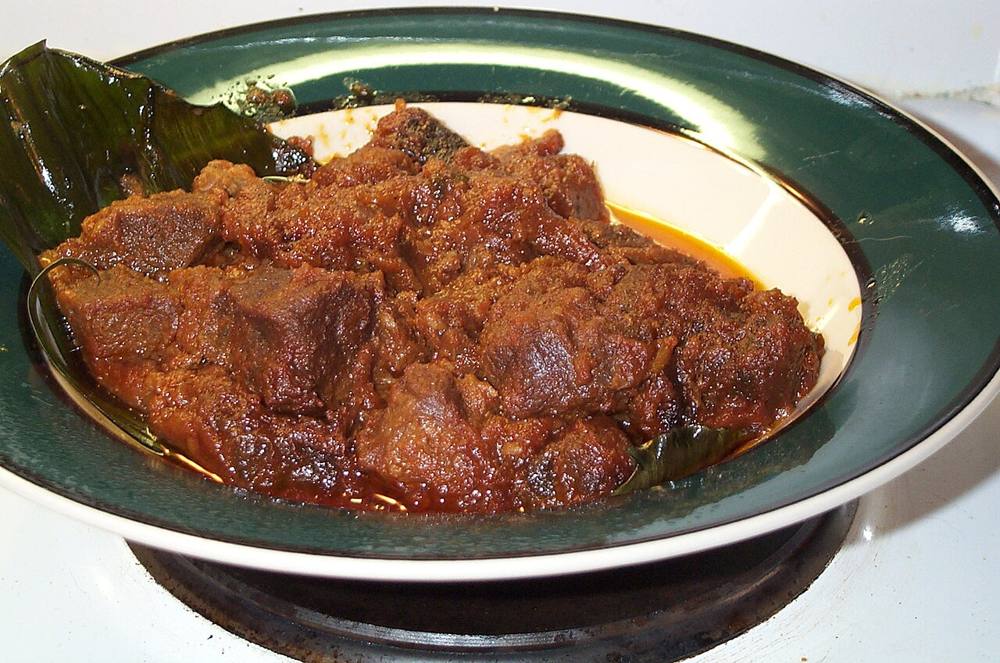
Because the word describes the method, not the main ingredient, Minang and Malay cooks apply it freely. Beef is the reference point, but in a region where beef was expensive and buffalo were working animals, the everyday rendangs were often made from cheaper things: offal, eggs, jackfruit, cockles pulled from the lakes, and the notorious jengkol bean. Each has its own name, usually just rendang plus the ingredient.
By what goes in the pot
Rendang daging
beef · (DAH-ging)
The classic. Shin, chuck, shank or brisket cut into large cubes, since small pieces fall apart over the long cook. In West Sumatra it was traditionally water buffalo (kabau), which is tougher, leaner and takes longer, and some cooks still prefer it for the deeper flavour. The driest, blackest versions are highland beef rendang.
- Cook
- 4–8 hours
- Occasion
- Weddings, Eid, guests
Rendang ayam
chicken · (AH-yam)
Quicker, lighter, and far more common at home than beef. Chicken cannot take eight hours, so it is usually cooked to kalio stage and finished dry over higher heat, or the sauce is reduced before the chicken goes in. A whole bird on the bone, cut into eight, is the norm; boneless breast is a Western mistake. This is the dish at the centre of the 2018 "crispy" row.
- Cook
- 1.5–2.5 hours
- Occasion
- Everyday, Friday meals
Rendang itiak
duck · (EE-tee-ak)
A speciality of Payakumbuh and the Limapuluh Kota district, often green rather than brown: rendang itiak lado mudo uses young green chillies instead of red, so the finished dish is olive-dark rather than black. Duck fat renders into the coconut oil and the result is heavier and more savoury than chicken.
- Cook
- 3–4 hours
- Occasion
- Festive, regional pride
Rendang paru
beef lung · (PAH-roo)
Lung is boiled first, sliced thin, then rendanged until it fries crisp at the edges. The texture is somewhere between jerky and a cracker, with all the sauce caught in the spongy tissue. A fixture of the Padang restaurant window and much cheaper than the beef. Spleen (rendang limpo) and liver (rendang hati) are treated the same way.
- Cook
- 2–3 hours after boiling
- Occasion
- Everyday
Rendang jariang
jengkol bean · (jah-REE-ang)
Jengkol is a large, flat tropical bean with a smell that divides families. Soaked, boiled and crushed flat, it takes rendang sauce like a sponge and goes soft and almost meaty. Loved in West Sumatra, it is a cheap protein with a serious following and a serious aftertaste. Eaten in large amounts it can be hard on the kidneys, so it is a dish of moderation.
- Cook
- 2–3 hours
- Occasion
- Everyday, acquired taste
Rendang telur
egg · (tuh-LOOR)
Hard-boiled eggs, sometimes fried first so the sauce has a skin to grip, simmered in the rendang base. The cheapest rendang of all and a childhood staple. A drier Payakumbuh form uses a thin egg omelette cut into strips and crisped in the sauce, almost like a cracker.
- Cook
- 1–2 hours
- Occasion
- Everyday, lunch boxes
Rendang lokan
cockle · (LOH-kan)
A coastal and lakeside dish from Pesisir Selatan and the shores of Lake Maninjau, using the large freshwater and brackish cockles of the region. The shellfish are shucked and rendanged briefly; the sauce does most of the work and the finished dish is darker and wetter than beef.
- Cook
- 1–2 hours
- Occasion
- Coastal everyday
Rendang cubadak
young jackfruit · (choo-BAH-dak)
Unripe jackfruit, boiled and torn, absorbs the sauce and shreds like pulled meat. It is the traditional vegetarian rendang, older than any modern substitute, and a reminder that the method matters more than the protein. Rendang pucuak ubi, made with cassava leaves, is a lighter cousin.
- Cook
- 2–3 hours
- Occasion
- Everyday, Lent, vegetarian guests
Rendang belut and ikan
eel and fish
Rice-paddy eel (belut) is a highland delicacy, rendanged whole in short sections. Fish rendang is rarer because fish falls apart; the Malay east coast makes a dry tuna version (rendang tongkol) that is more like a spiced fish floss.
- Cook
- 1–2 hours
- Occasion
- Regional